
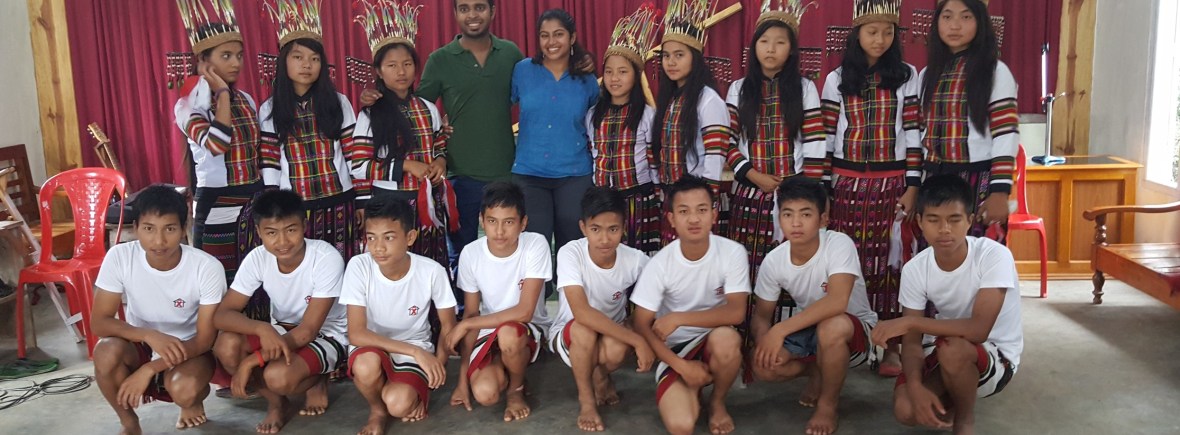
In 2015 I created a program called Dhwani to bring technical education to children in remote villages of India. “Dhwani” means “sound” in Hindi, and just like sound can travel without any barriers, my goal was to create change despite the obstacles we faced. The objective of Dhwani was to introduce the basics of technology to these kids and inspire them to aspire towards careers in tech. We were ready to face our challenges head on. And there sure were many!
We ran Dhwani in remote villages of the North Eastern state of Manipur which is a place with many wonderful simple tribal people living in a dangerous environment of unrest, riots and insurgency. During our program we trained 95 children from 7 different tribes including some who came across the border from Myanmar. The impact was so overwhelming that we went from having most kids who had never heard of technology and had a complete disinterest in science to inspiring 50% of the students to pursue technical education and careers in tech in their future. But this was no easy feat. Let me give you some context about what we were dealing with to make this happen.
The conditions in Manipur
On the day we landed, we were stranded at the airport because of bomb blasts. Five hours later we were finally escorted out in army convoys to safety and spent the rest of the night in army quarters for our own security. Soon enough we came to realize that there was a constant threat to our lives no matter where we went. Manipur had a constant stream of riots and insurgency. The infrastructure was so poor that it would take us 8 hours to travel from one village to another on mud roads. Often we had to be prepared to chop down fallen trees or move boulders that blocked our path. During our travels we often came across spots where shootings had occurred only days before. While traveling on highways we were told that we should stay within the vehicle to minimize chances of getting kidnapped by insurgents for ransom. Some days during our training we learnt that riots had broken out so we had to get escorted in army convoys if we were within city limits or else spend the night in the villages where we taught.
The villagers often had to deal with issues of power cuts on a daily basis. They didn’t have “luxuries” such as refrigerators or washing machines, and running water from taps was hard to find. Children from the villages informed us that their government funded schools were sometimes closed for 2 months at a stretch due to riots or bomb blasts. As such, the kids learnt to keep their spirits up by focusing their interests and energy into their music, dance, soccer, religion and agriculture and they often excelled at them. But despite all these hardships they all had big dreams.
The Challenge
So we understood their dreams but our challenge was how do we help them realize those dreams? How do we engage these kids who have never seen a laptop or computer in their life and introduce the world of technology to them? How do we convey the importance of the internet age and technological advancements to kids who don’t even have a refrigerator in their homes and frankly, don’t see the need for one. To help them achieve their dreams of making it big in the city, how do we explain the importance of education to kids who have 2 months of vacation due to riots. And most importantly how do we bridge the gap of technology and bring them on the same page as other kids who have grown up with plenty of opportunities because they are the ones these children will be competing with in the real world. I wanted to leave these kids with tools that they could use long after we wrapped up our program.
How we did it
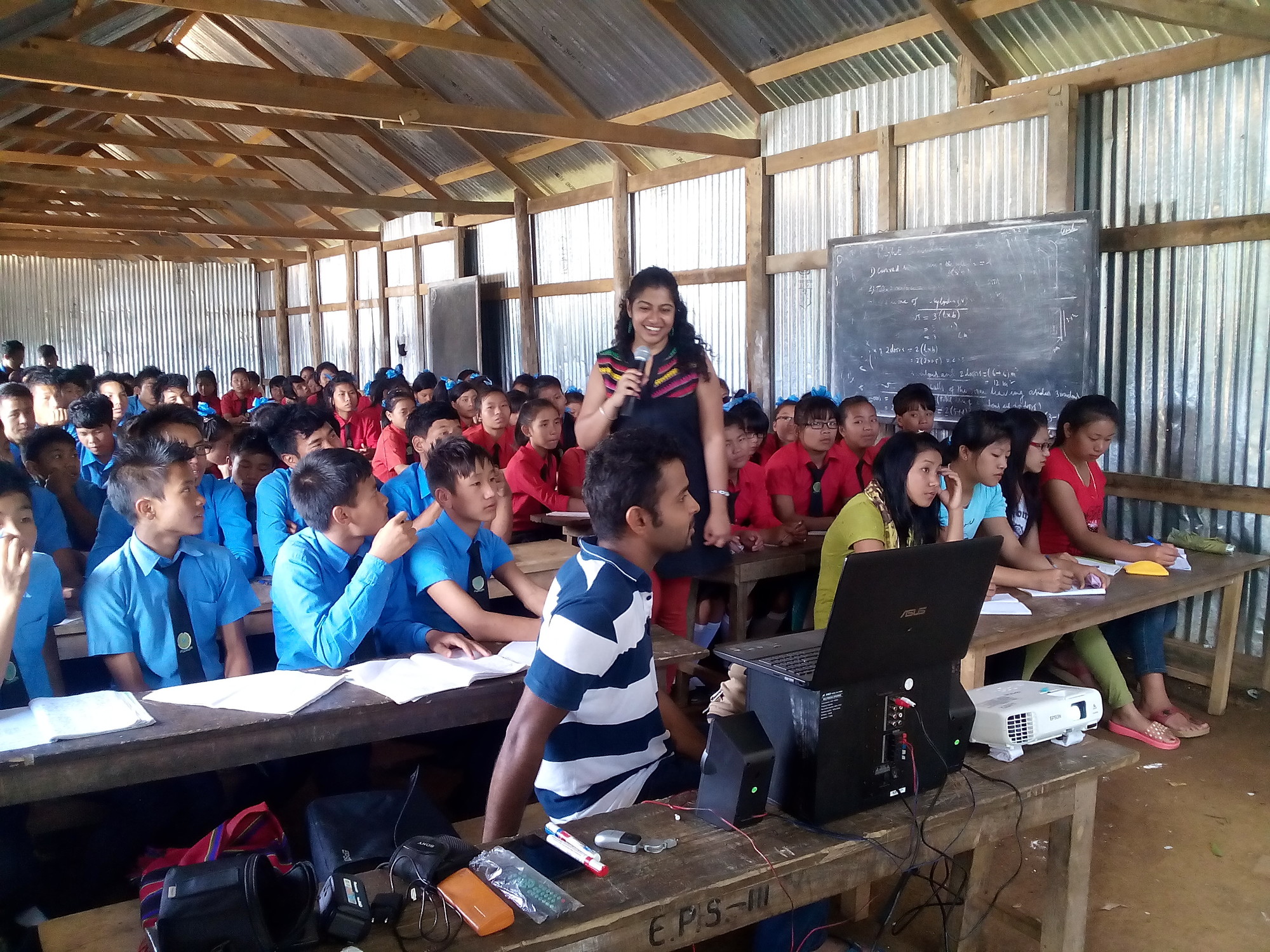
To develop my program I had to do a ton for research about our target audience to understand their culture and overcome communication barriers. I learnt that although their English speaking abilities were weak, we could get by with speaking simple basic English and in some cases we could use some folks from the village who would translate English to their local tribal languages. That meant our teaching material had to have lots of visuals and videos. We had to arrange for electronic devices such as multiple laptops and smartphones which we could pass around and have multiple group activities so the kids can learn about these devices with hands on training. We often had to time our group activities perfectly and conduct them during the power cuts. We knew that we had to teach them about the internet without any cell phone network or internet availability.
I also needed to make multiple contacts with folks from the villages to make arrangements for the classrooms, projectors, benches and other training arrangements ahead of time which was quite a challenge. Through all of this I had help from my Uncle Chris who was already involved with these tribal groups and was well connected with them. He enabled us to make these arrangements and ensured our safety during the entire trip. We couldn’t have done it without him.
The program itself covered basic topics such as what is a monitor, mouse and keyboard as these kids had never seen one in their lives. We also covered fundamentals of how to use a laptop, computer and smartphone; what technological advancements have taken place in the rest of the world in the fields of medicine (introduction to devices like pace makers), agriculture (relevant topic for professional farmers), lifestyle (electronic appliances, smart homes). We also did detailed sessions on the Internet, Google, email providers like Gmail, Apple maps, and Facebook and discussed internet browsers. We showed them how to use a smartphone and how it replaced computers today. And finally we taught them how to use basic programs like Paint, MS Word, Excel and did demos of apps like calculator, calendar, photos, music, notes, iBooks and chat services like Whatsapp and Facebook messenger.
I had done some research about government programs available to these kids in the fields of science and medicine and found that the bar of entry was lowered for children belonging to these tribes. There were special programs in place to encourage and enable more participation in fields of science and technology. The problem was that no one was aware of these programs or interested in these fields. So after each program we gauged the level of interest in each group and the numbers shot up astronomically. Before we wrapped up each session, we made sure the kids and their teachers understood the educational options and enrollment process available to them in the fields of science, technology and medicine.
The Impact
As a result of our training, the percentage of children who were interested in pursuing careers in science and technology increased by 50%. Through Dhwani, we trained a total of 95 children from 7 tribes and 12 villages – Pungmon, Haochong, Ijeirong, Waphong, Puichi, Aling, Bakuwa, Kabuikhullen 1, Kabuikhullen 2, Keithenmanbi, Tekcham, Khunou, Songulng.
We left our audience with brochures of information about how they can enroll in these programs and created awareness of their rights and facilities. We donated old laptops and technical education books to the local schools for the children. We also encouraged the children to stay in touch with us for career guidance and mentorship via phone and/or email. Some of them did graduate to college and bought themselves smartphones which they used to reach out and stay in touch with us.
We wrapped up our program in the hope that these children were inspired and empowered to give their dreams wings. We hoped that they were not only motivated to aspire towards pursuing careers in tech but also felt inspired to innovate and use technology to improve their own lives and villages.
 Sejal D'Souza